Why Tide Prediction Machines Mattered
The movement of ocean tides is vital to many groups of people, from fishers to surfers to coastal engineers. The behavior of tides over time provides valuable data to those studying climate change around the world. Before computers, tides were predicted by machines with levers and pulleys.
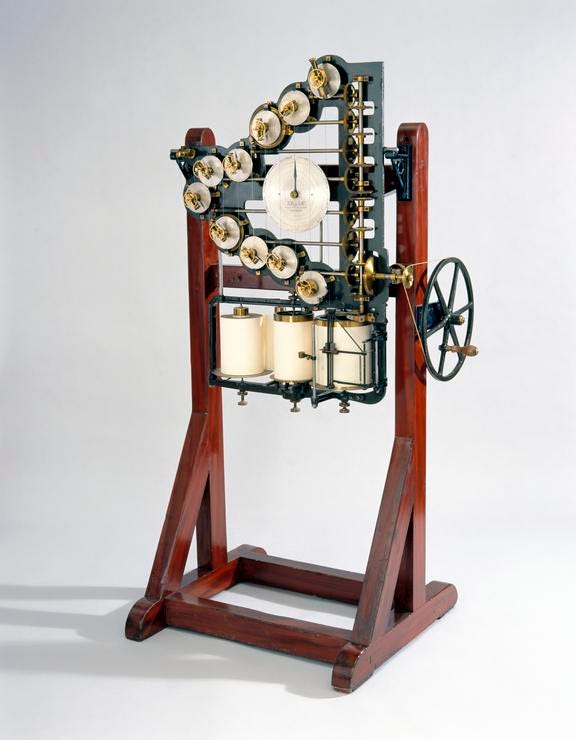
Lord Kelvin’s first tide-predicting machine. Credit Science Museum, London
The machines evolved to consider an increasing number of tidal constituents, representing changes in the position of tide-generating astronomical bodies. Today, tide predictions are made quickly and digitally.
Kelvin and Ferrel Machines
In 1872, the British physicist Sir William Thomson, later known as Lord Kelvin, devised the first tide-predicting machine to simulate the combination of periodic motions that produce tides. This machine calculated the tide height according to a mathematical formula.
William Ferrel, a mathematician with the U.S. Coast and Geodetic Survey and inspired by Thomson’s work, designed a more compact version of the machine in 1880. Based on 19 harmonic components of tides, the machine gave direct readings of predicted high and low tides. The device was in use from 1883 to 1910. Ferrel’s tide predictor showed that computation by machines could replace calculations performed by humans.
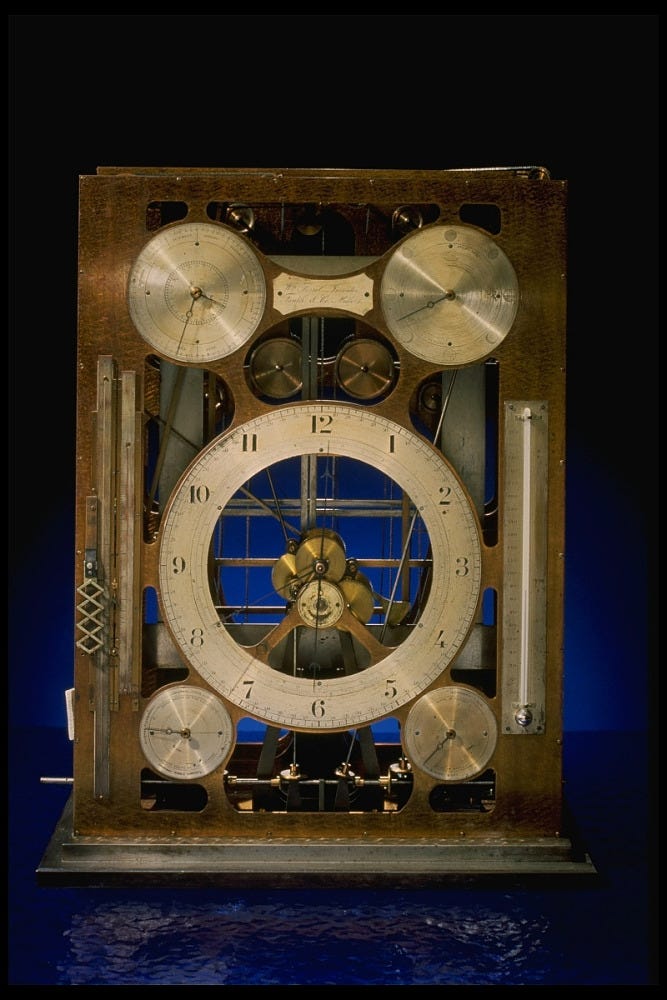
William Ferrel’s tide predicting machine. Credit: Smithsonian
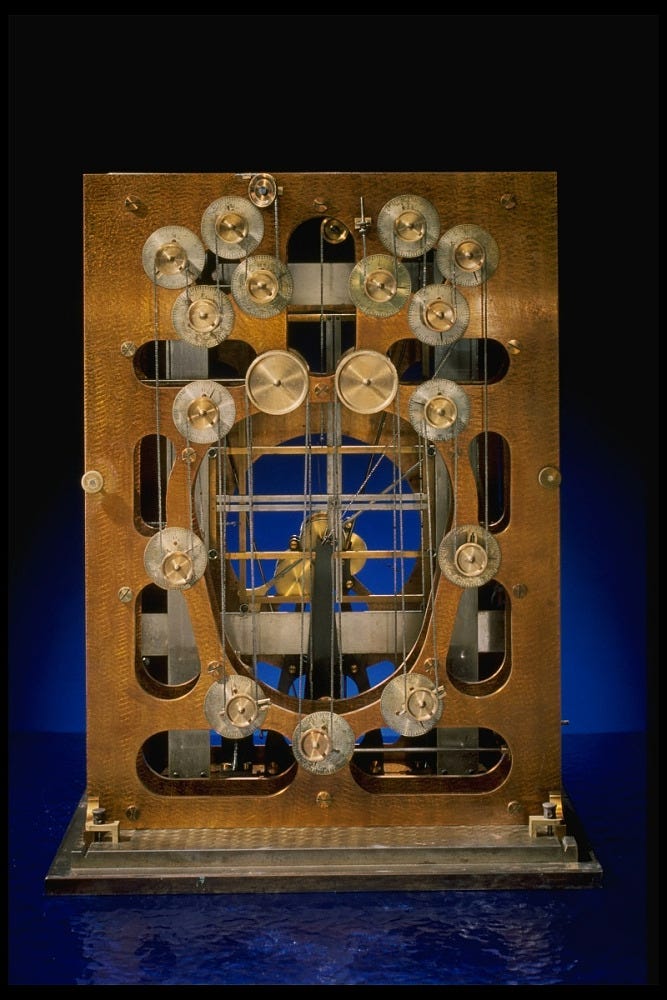
William Ferrel’s tide predicting machine. Credit: Smithsonian
Wartime Tide Forecasting
In 1942, Kelvin’s tide prediction machine was reworked to accommodate 26 tide constituents. The machine was one of two used by Arthur Doodson to forecast tides for the Normandy invasion.

