A Treacherous Passage
Cook Strait, the narrow channel between the two main islands of New Zealand, is known for its tumultuous tides. The strait was named after British explorer James Cook, who sailed through it multiple times during his exploration voyages in 1770 and 1777.
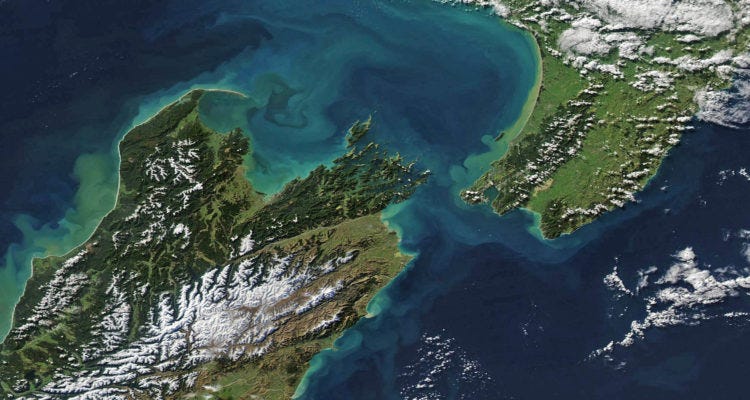
NASA Satellite image of Cook Strait. Credit: Earth.com
The Cook Strait runs between the North and South Islands of New Zealand, and it is one of the most treacherous bodies of water on Earth. It is known for its highly turbulent waters and unpredictable weather patterns. When the tide changes direction, it creates a powerful current known as “The Rip,” which has been known to capsize boats and even pull people up to two kilometers offshore. At peak tide, water can rush into the strait at speeds up to 16 knots, almost 30km/h. This makes it extremely dangerous for fishers and recreational boaters who are not experienced navigating rough waters.
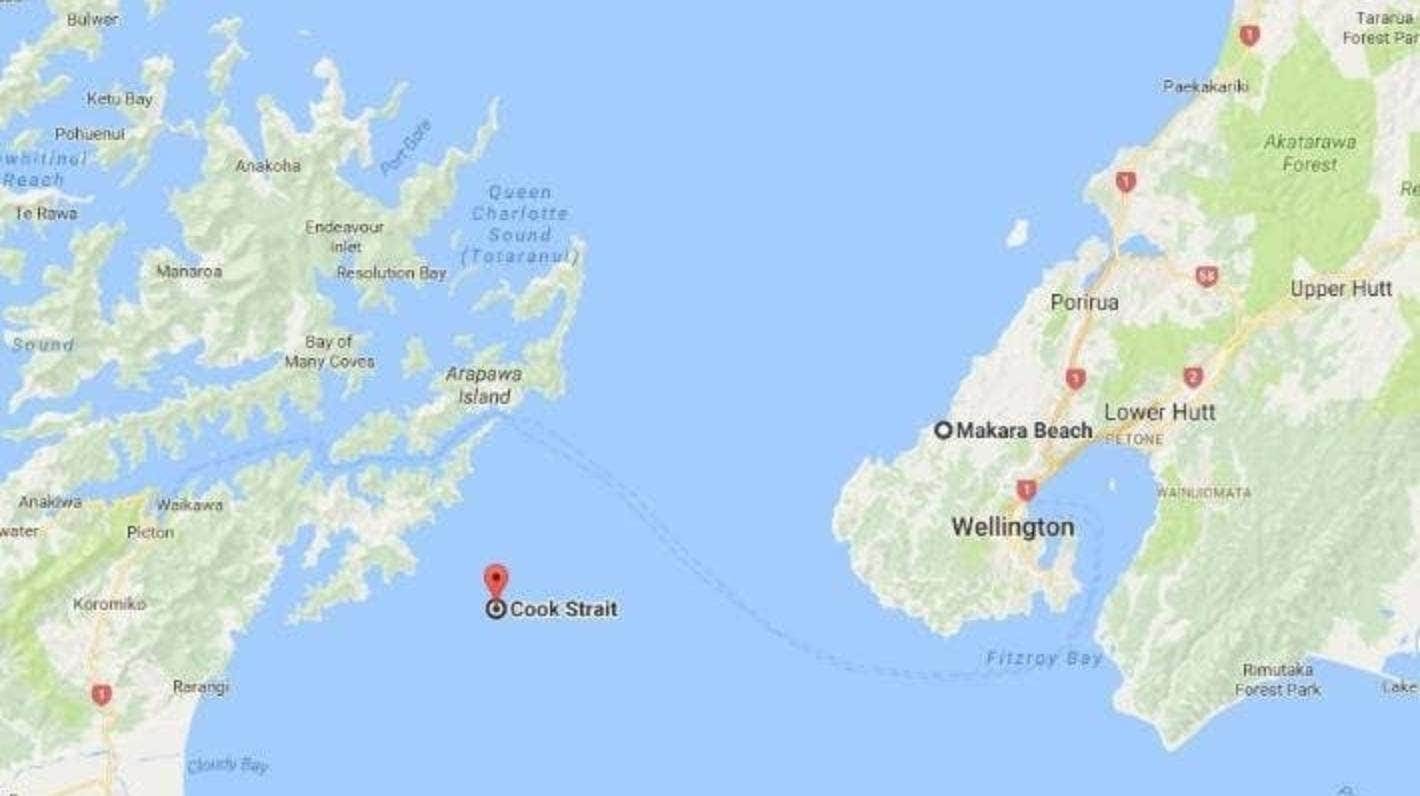
Map of Cook Strait. Credit: https://www.stuff.co.nz/
Why the Currents Are So Strong
The tides are caused by the meeting of the warm Tasman Sea from the north and the colder South Pacific Ocean from the south. The tides form whirlpools, reaching up to 80 feet in diameter. The currents are primarily unpredictable, except for one time each day when they meet during low tide.
Navigation Hazards
Over the years, Cook Strait has claimed hundreds of lives. It has been nicknamed “The Graveyards” because of the numerous ships sunk. In 1855, a steamer called the City of Newcastle was lost after being caught in the swift current. Many more vessels have followed her into oblivion due to these turbulent tides.
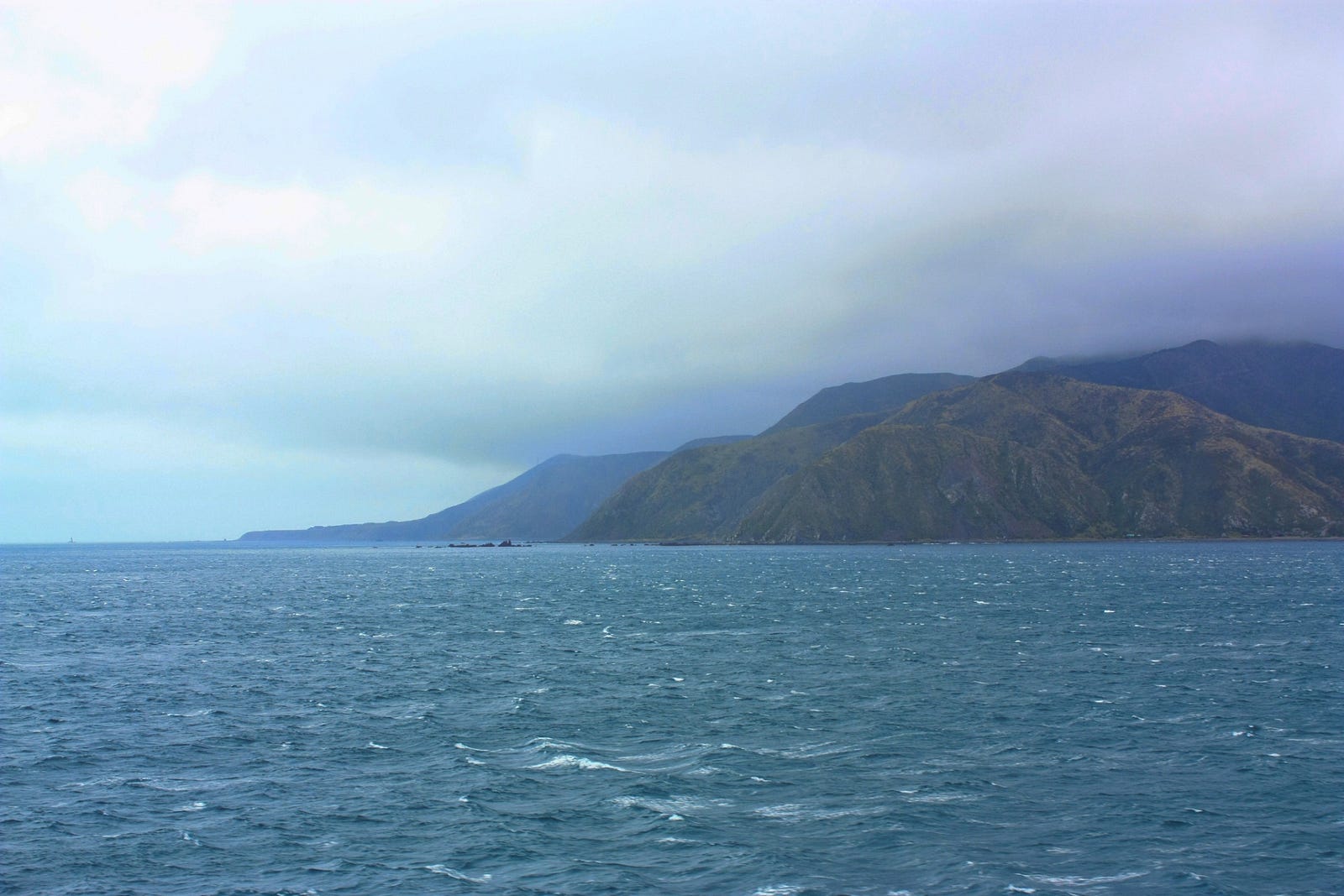
The Rough Waters of Cook Strait. Credit: Henry Lee, via https://fotoeins.com/
To keep people safe, locals have created several warnings about the hazards of this strait. For example, one pamphlet warns that even if you can see a familiar landmark onshore, “you could be swept past it in a matter of minutes.” It also cautions that the weather above can look calm even while a maelstrom is raging underneath.
The lesson here? If you’re planning to take your boat into Cook Strait, ensure you know what you’re doing and leave plenty of time to get back to shore before the tide changes.

