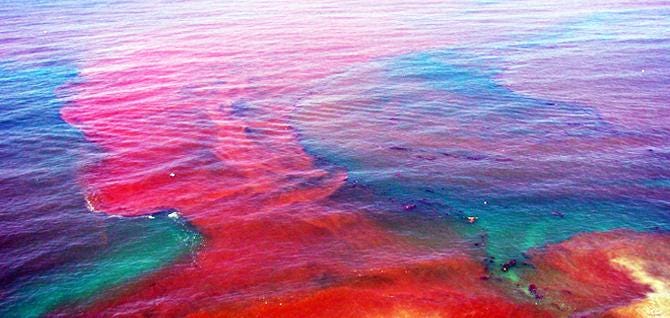
Red Tide off the coast of California. Credit: National Oceanic and Atmospheric Administration via technicianonline.com
What Red Tide Means
“Red tide” is a term for a harmful algal bloom, known as HAB. HAB occurs when algae colonies, simple plants that live in freshwater and seawater, get out of control, producing toxins that kill humans and animals like fish, shellfish, marine mammals, and birds. Despite their rarity, HABs can have debilitating or fatal effects on humans.
Red tides in the United States are caused by at least three dinoflagellate species and one diatom species. Red tides are most prevalent in the Gulf of Mexico, off the coasts of California, and in the Gulf of Maine in the United States. When conditions are right, a specific microorganism produces an algal bloom at each location.
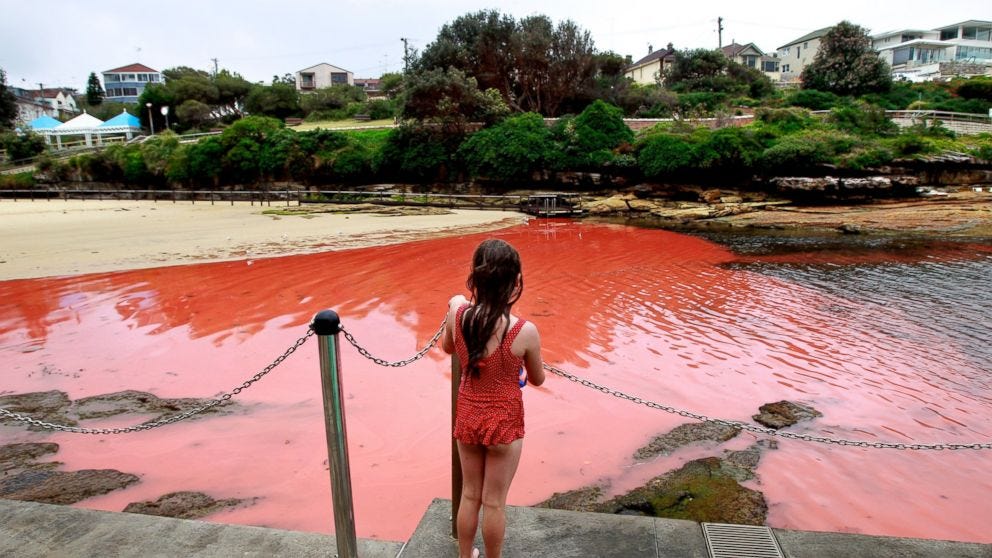
Red Tide, Sydney Australia. Credit: Edwina Pickles/The Sydney Morning Herald/Fairfax Media/Getty Images via ABCnews.com
Florida and Karenia brevis
Nearly every summer, Florida’s Gulf Coast experiences one of the nation’s most famous HABs. Microalgae, known as dinoflagellates, are responsible for this bloom, producing toxins that kill fish and make shellfish dangerous to eat. The presence of enough phytoplankton will cause the water to appear red. Scientists prefer “harmful algal bloom” to red tide, which has become synonymous with the bloom.
The Gulf of Mexico contains low concentrations of Karenia brevis, a type of toxic algae. Algal blooms form when environmental factors, like temperature, nutrient levels, and wind are right. A red tide releases vast amounts of brevotoxin into the sea, affecting Texas, Louisiana, Alabama, and Florida.
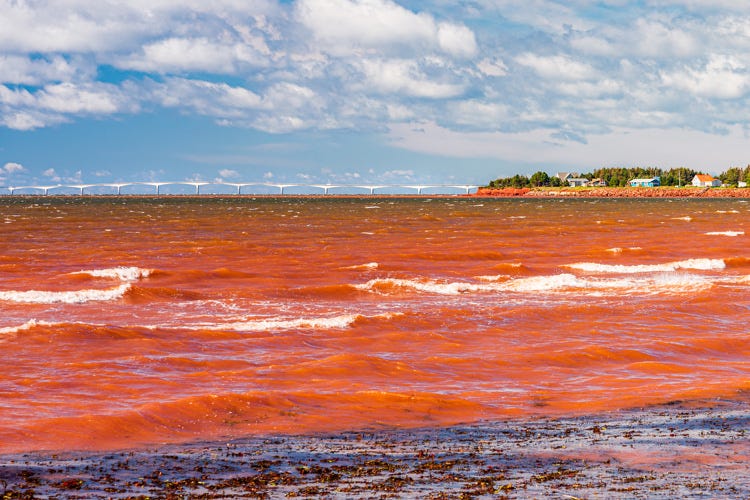
Red Tide on the Coast: Credit: Surfer Today
Other Red Tide Species
Alexiium catanella and Alexiium fundyense are the main factors contributing to red tides in the Gulf of Maine. Red hues only appear when dense-growing blooms occur between two water sources.
Usually, red tides off California’s coast result from the Pseudonitzchia species of algae. When nutrients abound, diatoms bloom in the ocean, and if not enough nutrients are in the water, they die. These algae bloom primarily in spring and summer, although the most toxic blooms often occur in spring.
All U.S. coastal states have reported HABs, and their frequency is likely to increase. As a result of HABs, local and regional communities suffer health problems and economic losses.
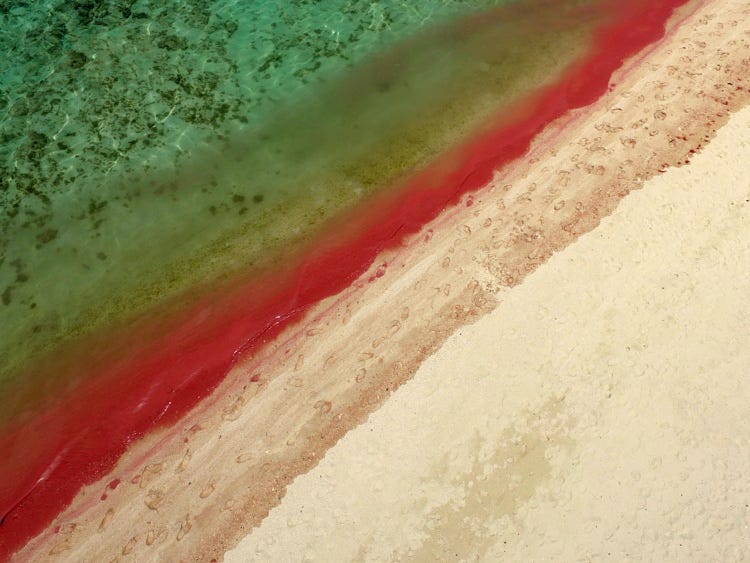
Red Tide from Above. Credit: Surfer Today
Non-toxic blooms can also negatively impact marine ecosystems in addition to toxic blooms. Decomposing algae can deplete oxygen from the water, resulting in the area becoming oxygen-deficient enough for animals to leave or die. And some algae produce dangerous toxins that can kill fish, shellfish, mammals, and birds and may cause illness in humans.
However, not all algal blooms are harmful. The tiny plants in most blooms serve as food for the animals in the ocean; they serve as the basis for the ocean ecosystem.
National Ocean Service scientists detect and predict bloom locations because adverse effects of these ‘red tide’ events must be anticipated and minimized to protect humans and wildlife.

