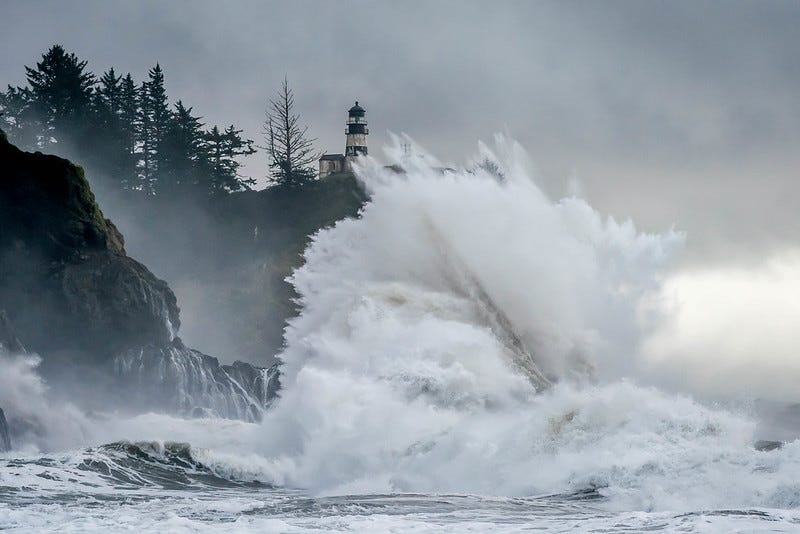
King Tide, Oregon Coast. Credit: thatoregonlife.com
A Quick Tide Vocabulary Guide
Let this article be your guide to the low, high, spring, and neap tides! Tides are the alternating advances and retreats of seawater along the shoreline. During high tide, the tide advances to its furthest extent onto the coastline, while it recedes to its furthest extent during low tide. High tides that are significantly higher than average are called King Tides. This phenomenon is usually associated with a new moon or when the moon is closest to earth. But wait, there is more to the story!
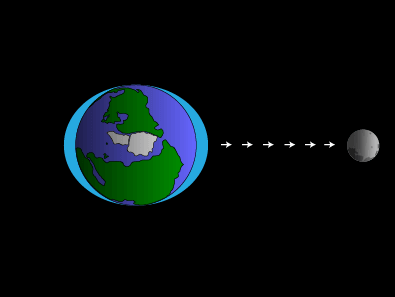
Tidal Bulge at high tide. Credit: SciJinx, NOAA.gov
High Tides
High Tides
The earth’s side of the moon will have a bulge called the direct tide. The ocean will also bulge on the other side of the planet; this is called the opposing tide, and it occurs when the earth’s inertial force exceeds the moon’s gravitational pull. As a result of these forces, high tides occur on opposite sides of the planet.
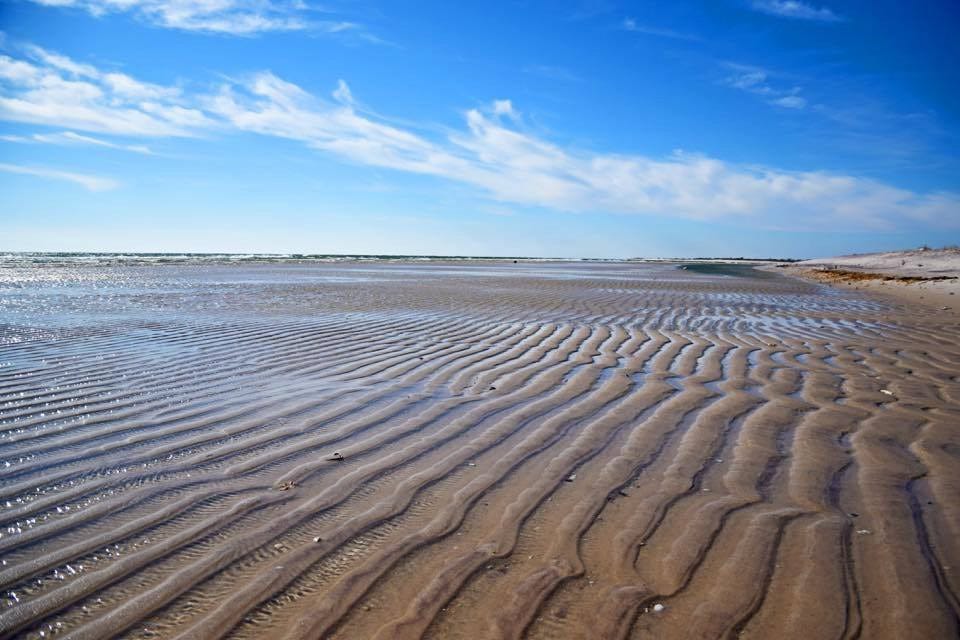
Low tide Fire Island National Park, NY. Credit: National Park Service (nps.gov)
Low Tides
Low Tides
Low tides occur between high tides. Depending on where you live, low tide can be only a few feet, while the ocean can recede much farther in other locations. There are two tides in every 24-hour cycle, but since the moon rises 50 minutes later each day, the tides differ by the same 50 minutes each day.
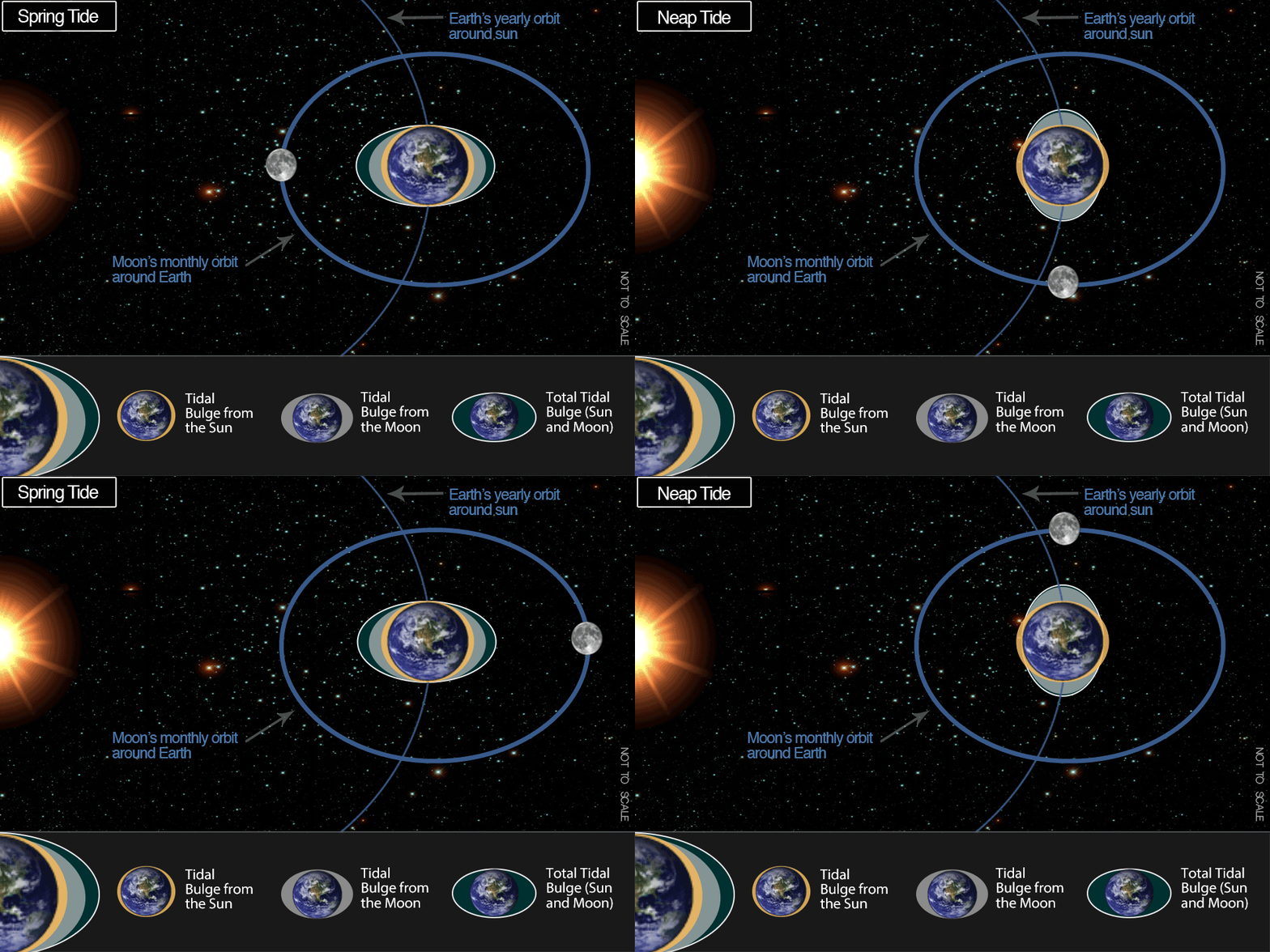
Animation of the Spring and Neap Tide. Credit: NOAA.gov
Spring and Neap Tides
Spring Tides
Moon phases also affect tides. High tides are highest during their full or new moon phase, while low tides are lowest. The sun, moon, and earth align to cause a spring tide. The oceans bulge more than other times due to the sun’s gravity.
Neap Tides
During neap tides, the moon is in its quarter phase, and the sun is tugging opposite the moon’s gravity. The result of these tides is the lowest high tide and the highest low tide, which means there is the least extreme difference between high and low tides.
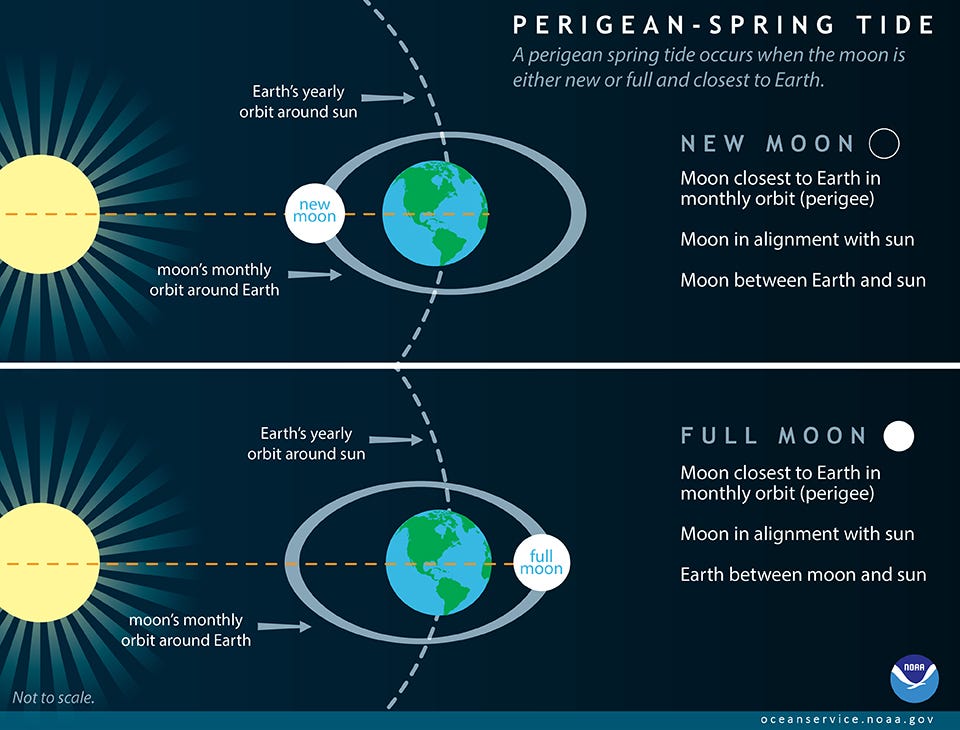
Perigee Tide. Credit NOAA.gov
Perigee Tides
The tides are also affected during perigee, the closest point in the moon’s orbit around earth. Combined with a full or new moon, a moon at perigee will produce the highest and lowest tides. Scientists can easily forecast these high tides, allowing them to issue warnings for coastal flooding.

